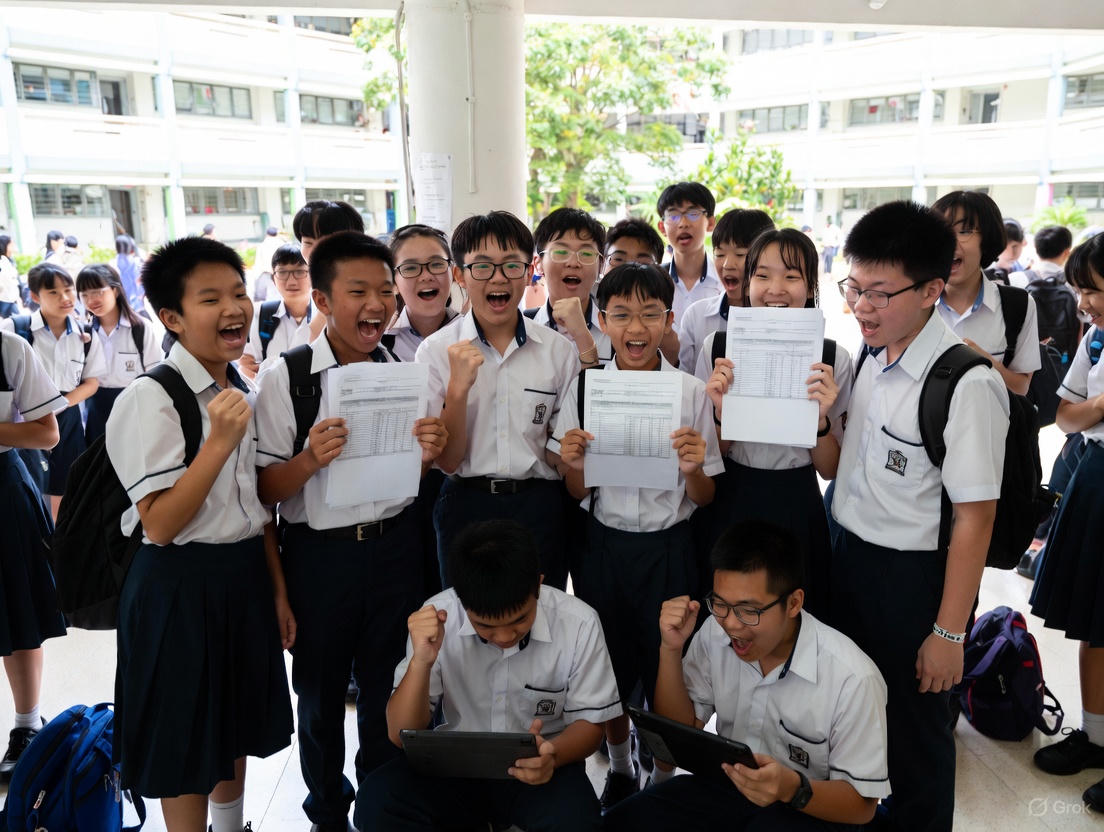
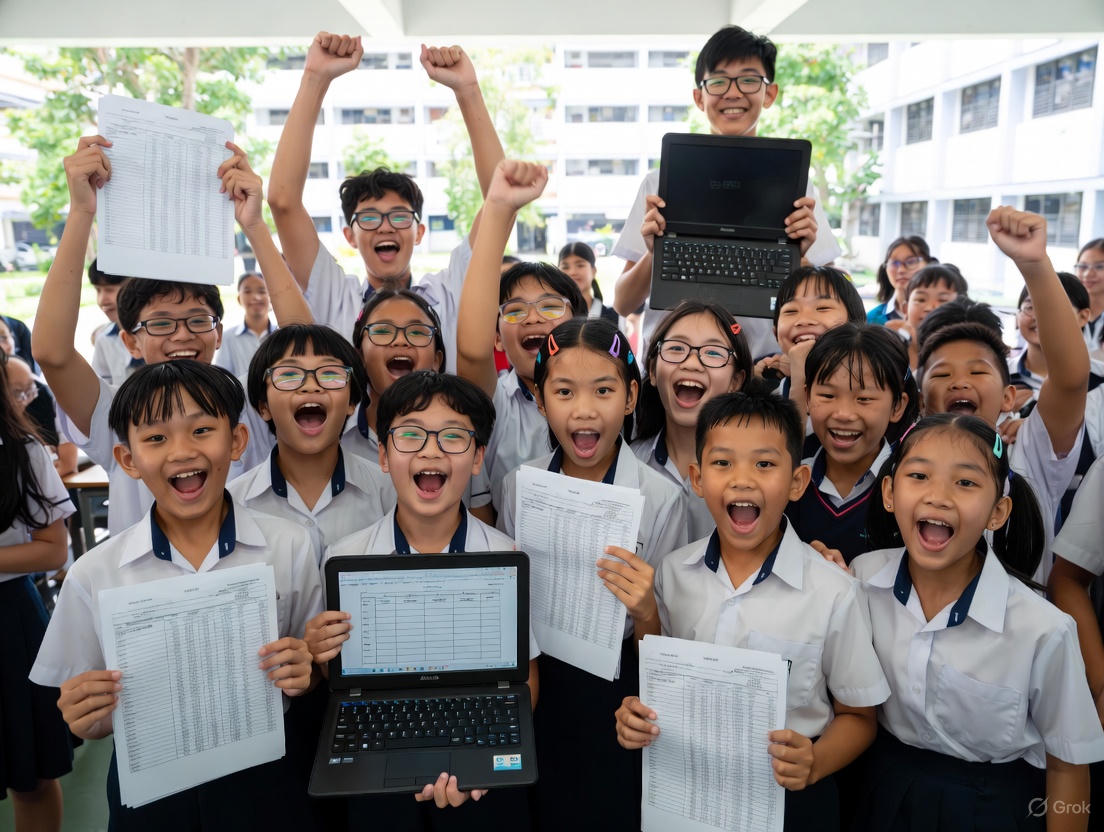
Imagine a bustling Singaporean household, where the aroma of dinner wafts through the air as a young student sits at the dining table, laptop open, attending an online tuition session. The screen flickers with equations and diagrams, and a voice guides the student through the mysteries of algebra. This scene is increasingly common as parents in Singapore prioritize their children's education, especially in mathematics, by leveraging the benefits of online tuition. But how can they ensure that this supplementary education aligns with the Ministry of Education (MOE) syllabus, guaranteeing both quality and relevance?
At the heart of Singapore’s education system lies the MOE syllabus, a carefully curated framework designed to meet national education standards and prepare students for future challenges. Aligning with this syllabus is not just about ticking boxes; it’s about ensuring that every lesson imparts the skills and knowledge necessary for academic success. By adhering to the MOE guidelines, online tuition providers like Odyssey Math Tuition assure parents and students that their curriculum is both relevant and of high quality.
Picture this: a student juggling school, sports, and social commitments, yet still needing extra help with math. Enter online tuition, a flexible and accessible solution that fits seamlessly into busy schedules. Utilizing platforms like Zoom or Skype, students can learn from anywhere, breaking the constraints of traditional classroom settings. This approach not only saves travel time but also provides access to a wealth of digital resources, such as shared whiteboards and e-learning materials, enhancing the learning experience.
As technology advances, so does its role in education. Online tuition platforms often integrate interactive tools that cater to diverse learning styles. Consider the shared whiteboard feature, which transforms a simple screen into a dynamic canvas where students and tutors can solve problems together. This interactivity mimics the tactile experience of a physical classroom, making abstract concepts more tangible. Additionally, recorded sessions allow students to revisit lessons, ensuring they fully grasp each topic.
For parents and students, the assurance that their online tuition aligns with the MOE syllabus is paramount. But how can this be verified? Reputable tuition services like Odyssey Math Tuition often provide detailed curriculum outlines, showcasing how each lesson corresponds to MOE standards. Furthermore, these providers frequently update their materials in response to changes in the syllabus, ensuring ongoing compliance and relevance.
With a plethora of options available, selecting the right online tuition provider can be daunting. Numerous moms and dads in Singapore are turning to reliable online tuition providers to assist their young ones excel in difficult topics like mathematics.. Parents should consider factors such as the provider’s track record, the qualifications of their tutors, and the availability of resources like past exam questions and structured programs. It’s akin to choosing a reliable guide for an educational journey—one who not only knows the destination but also the best route to get there.
As we look to the future, the landscape of mathematics education continues to evolve. What if online tuition becomes the norm, with virtual classrooms as diverse and vibrant as their physical counterparts? This shift could democratize education, offering quality learning experiences to students regardless of their geographical location. For now, aligning with the MOE syllabus remains a crucial step in this journey, ensuring that every student is equipped to navigate the challenges ahead.
In the end, the quest for quality education is a shared journey between parents, students, and educators. By embracing online tuition and ensuring alignment with the MOE syllabus, Singaporean families can confidently support their children’s academic pursuits, paving the way for future success.
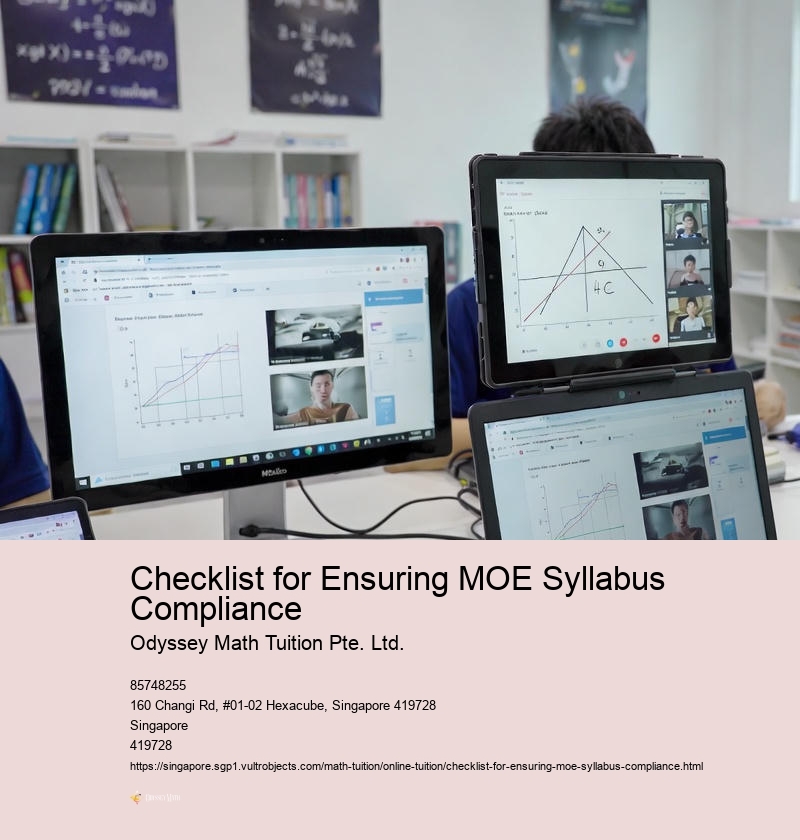
Picture a bustling Singaporean household, where the aroma of dinner wafts through the air, and a young student sits at the dining table, laptop open, delving into the world of mathematics. With the click of a button, a friendly tutor appears on the screen, ready to guide the student through the intricacies of algebra and geometry. This is the modern landscape of online tuition in Singapore, a thriving industry where technology meets education, offering flexibility and accessibility to students and parents alike.
In the heart of this educational ecosystem lies the Ministry of Education (MOE) mathematics syllabus, a meticulously crafted framework that shapes the curriculum across Singapore. But what makes this syllabus so pivotal? Imagine it as the blueprint for a skyscraper, ensuring every floor aligns perfectly to create a sturdy, cohesive structure. The MOE syllabus provides a consistent foundation, ensuring that every student, whether in a bustling city school or a quiet suburban classroom, receives a comprehensive and balanced mathematical education.
The MOE syllabus is more than just a list of topics; it's a roadmap designed to nurture critical thinking and problem-solving skills. It encompasses a range of mathematical areas, from basic arithmetic in primary school to advanced calculus in junior college. Each level builds upon the previous, creating a seamless transition that equips students with the necessary tools to tackle complex mathematical challenges.
For primary schoolers, the focus is on foundational concepts such as fractions and model drawing. As students progress to secondary levels, they encounter the thrilling world of algebra, geometry, and trigonometry. By the time they reach junior college, they're navigating the sophisticated realms of statistics and calculus, preparing for A-Level exams that demand a deep understanding of mathematical principles.
Ensuring alignment with the MOE syllabus is not merely about compliance; it's a commitment to excellence. Take, for instance, Odyssey Math Tuition, a beacon of quality in the realm of online tuition. By adhering to the MOE guidelines, they guarantee that their curriculum not only meets national standards but also remains relevant and engaging for students.
Why is this alignment crucial? Imagine trying to assemble a puzzle without the picture on the box. The MOE syllabus acts as that guiding image, helping educators piece together a coherent and comprehensive educational experience. This alignment ensures that students are not just memorizing formulas but are truly understanding and applying mathematical concepts.
In the digital age, online tuition has revolutionized the way students learn. Platforms like Zoom and Skype have become virtual classrooms, bringing tutors and students together in an interactive and engaging environment. These sessions often incorporate shared whiteboards and digital resources, transforming traditional learning into a dynamic experience.
But what if technology could take this a step further? Imagine a future where artificial intelligence tailors lessons to each student's unique learning style, or where virtual reality immerses students in a 3D mathematical universe. The possibilities are endless, and the innovations in online tuition are just beginning to unfold.
In this educational journey, parents play a crucial role, acting as navigators and supporters. They research and invest in online tuition, seeking flexible, affordable, and exam-oriented support for their children. For them, the MOE syllabus serves as a reassuring benchmark, a testament to the quality and relevance of the education their children receive.
Consider the busy parent juggling work and family commitments, yet finding time to ensure their child has access to the best educational resources. Their involvement is akin to a conductor orchestrating a symphony, ensuring every note, every lesson, aligns perfectly to create a harmonious learning experience.
As we gaze into the future, what does the horizon hold for mathematics education in Singapore? The integration of technology into learning continues to evolve, promising even greater accessibility and personalization. The MOE syllabus will undoubtedly adapt, reflecting advancements in educational methodologies and global trends.
Imagine a world where every student, regardless of background or location, has access to top-tier mathematical education. A world where learning is not confined to the classroom, but is an ever-present, interactive journey. This is the potential of online tuition, a key player in shaping the future of education in Singapore.
As we close this exploration, consider the impact of a well-aligned curriculum, dedicated educators, and engaged parents. Together, they form a powerful triad, propelling students toward academic success and a lifelong love of learning. The MOE syllabus, the backbone of this educational endeavor, ensures that every student has the opportunity to excel, paving the way for a brighter, mathematically enriched future.
Ensuring curriculum alignment with the Ministry of Education (MOE) syllabus is crucial for any primary school mathematics program in Singapore. This alignment guarantees that students receive a comprehensive education that prepares them for national exams like the PSLE. Schools and online tuition providers must regularly review and update their curriculum to reflect changes in the MOE syllabus, ensuring that teaching methods and materials remain relevant. By aligning with the MOE's structured framework, educators can better focus on developing foundational skills, such as fractions and problem-solving. This alignment also helps parents feel confident that their children are receiving quality education tailored to national standards.
The use of interactive tools in online tuition can significantly enhance the learning experience for primary school students. Platforms that incorporate digital resources like shared whiteboards, interactive quizzes, and virtual manipulatives help make abstract math concepts more tangible. These tools allow for real-time feedback and personalized instruction, catering to each student's unique learning pace and style. By engaging students with technology, educators can foster a more dynamic and interactive learning environment that encourages curiosity and understanding. Moreover, these tools provide a flexible learning experience, enabling students to access lessons from the comfort of their homes.
Having qualified tutors is a cornerstone of effective online tuition in mathematics. Tutors with a deep understanding of the MOE syllabus and proven teaching strategies can make a significant difference in a student's academic performance. These educators are skilled in breaking down complex topics into manageable lessons, ensuring students grasp essential concepts like fractions and model drawing. They also provide targeted support, addressing individual learning gaps and reinforcing strengths. By hiring experienced tutors, online tuition platforms can offer personalized and effective educational experiences that align with national standards and help students excel.
Parental involvement is a key factor in ensuring the success of online tuition for primary school mathematics. Parents play a crucial role in supporting their children's learning by monitoring progress, providing encouragement, and facilitating a conducive study environment at home. Engaging with tutors and staying informed about the curriculum helps parents understand the challenges their children face and the strategies employed to overcome them. This collaborative approach between parents, students, and tutors creates a supportive network that enhances learning outcomes. Ultimately, active parental participation fosters a positive attitude towards education and motivates students to achieve their best.
Effective feedback mechanisms are essential for tracking student progress and ensuring syllabus compliance in online tuition programs. Regular assessments and evaluations provide valuable insights into a student's understanding of core math concepts. These mechanisms allow tutors to identify areas where students excel or struggle, enabling tailored interventions to address specific needs. Constructive feedback also empowers students to take ownership of their learning, encouraging them to reflect on their performance and strive for improvement. By integrating robust feedback systems, online tuition platforms can maintain high educational standards and support continuous student development in alignment with the MOE syllabus.
Imagine a bustling city like Singapore, where the rhythm of life is intertwined with the vibrant energy of its students, each striving for academic excellence. In this dynamic environment, parents and students alike seek the holy grail of effective learning: a curriculum that not only challenges but also aligns with national standards. This is where the Ministry of Education (MOE) syllabus comes into play, a guiding star ensuring that every student is on the right path, especially in the realm of mathematics.
Picture this: a young student, eager to unravel the mysteries of algebra, geometry, and trigonometry, yet feeling lost in a sea of formulas and theorems. What if the compass guiding their journey is misaligned? Ensuring that the secondary school curriculum in Singapore aligns with the MOE syllabus is crucial for students, particularly those preparing for O-Levels in Elementary Math (E-Math) and Additional Math (A-Math). This alignment guarantees that students are not just learning, but learning what matters.
Aligning with the MOE syllabus ensures that the curriculum meets national education standards, as offered by platforms like Odyssey Math Tuition. This alignment is not just about ticking boxes; it's about ensuring relevance and quality. It’s akin to setting a ship on the right course, where every lesson plan, every exercise, is a step towards a well-rounded mathematical understanding, preparing students for exams and beyond.
In the digital age, the classroom is no longer confined to four walls. Online tuition has emerged as a revolutionary approach, offering flexibility and accessibility. Imagine a student attending a math class from the comfort of their home, interacting with tutors via video platforms like Zoom, and engaging with interactive tools such as shared whiteboards. This modern-day classroom mirrors traditional learning but with added convenience, making it an ideal choice for busy students.
In the world of secondary education, E-Math and A-Math are the twin pillars supporting students’ mathematical prowess. E-Math covers foundational concepts, while A-Math delves deeper into complex areas, challenging students to expand their logical and analytical skills. This dual approach ensures a comprehensive understanding, preparing students for various academic and professional pathways.
As we navigate the educational landscape, it’s essential to blend traditional teaching methods with innovative practices. Online tuition platforms, like Odyssey Math Tuition, are at the forefront of this evolution, ensuring curriculum compliance while embracing new technologies. They offer e-learning resources, past exam questions, and structured self-paced programs, creating a holistic learning environment.
In this journey of academic discovery, the alignment with the MOE syllabus is not just a requirement but a promise of quality education. It’s about setting the stage for students to thrive in a competitive world, armed with knowledge and confidence. So, as you sip your coffee and ponder the future of education, consider this: what if the key to unlocking a student’s potential lies in the perfect blend of tradition and innovation?
For parents and students navigating the maze of secondary school mathematics, the path may seem daunting. Yet, with the right tools and guidance, it transforms into a journey of discovery and achievement. Embrace the opportunities offered by online tuition, align with the MOE syllabus, and watch as the world of mathematics unfolds, rich with possibilities and promise.
Imagine entering a realm where numbers perform, formulas resonate, and equations spring to life, guiding you through a maze of logic and creativity. This is the world of Junior College (JC) math in Singapore, where aligning with the Ministry of Education (MOE) syllabus is not just a requirement but a gateway to academic excellence. For parents and students navigating this intricate landscape, understanding the nuances of MOE syllabus compliance is essential. With the rise of online tuition, ensuring that your educational journey is on the right track becomes both a challenge and an opportunity.
In Singapore, the MOE syllabus serves as the benchmark for educational excellence, ensuring that all students receive a comprehensive and consistent education nationwide. But why is this alignment so crucial for JC-level math? Picture the MOE syllabus as a meticulously crafted roadmap, guiding students through the complex terrain of advanced mathematics. It ensures that students are not only prepared for national exams but are also equipped with the skills needed for future academic and professional pursuits. Odyssey Math Tuition, for instance, emphasizes this alignment, guaranteeing that their curriculum meets national education standards, providing relevance and quality in every lesson.
As students ascend the ladder of mathematical complexity, they encounter a range of topics that challenge their analytical and problem-solving skills. At the JC level, subjects such as calculus, statistics, and functions come into play. Imagine calculus as a powerful telescope, allowing students to explore the infinite possibilities of change and motion. Meanwhile, statistics acts as a detective's toolkit, enabling students to unravel patterns and uncover truths hidden within data. Functions, on the other hand, serve as the language of relationships, explaining how variables interact in diverse scenarios.
Calculus is the heartbeat of JC math, offering students a lens through which they can view the world in motion. From the acceleration of a car to the growth of a population, calculus provides the tools to analyze and predict changes. Online tuition platforms, such as those offering interactive digital aids, can transform this abstract concept into a tangible experience. Through virtual simulations and real-world applications, students can grasp the elegance of calculus, making it less of a daunting mountain and more of an exciting adventure.
In an era where data drives decisions, understanding statistics is akin to possessing a superpower. JC students delve into the intricacies of probability, distributions, and data analysis, learning to draw conclusions from complex datasets. Online e-learning resources, featuring pre-recorded videos and structured self-paced programs, provide a flexible and engaging way for students to master these concepts. Picture statistics as a trusted ally, guiding students in making informed decisions based on evidence rather than guesswork.
Functions are the bridges that connect different mathematical concepts, illustrating how one change can ripple through a system. At the JC level, students explore various types of functions, from linear to exponential, each with its unique properties and applications. Through online tuition, students can interact with dynamic graphs and models, visualizing the impact of functions in real-time. This interactive approach transforms abstract symbols into vibrant stories, making learning both engaging and effective.
In the bustling world of Singaporean education, online tuition emerges as a beacon of flexibility and accessibility. It allows students to learn at their own pace, revisiting challenging topics as needed, and provides parents with the peace of mind that their children are receiving quality education aligned with MOE standards. Online platforms offer a wealth of resources, from past exam questions to interactive whiteboards, catering to the diverse needs of students preparing for A-Levels. But what if online tuition could do more than just supplement classroom learning? Imagine a future where personalized algorithms tailor lessons to each student's learning style, making education not only efficient but also deeply personal. As technology continues to evolve, the potential for online tuition to revolutionize the way we learn is boundless.
As we gaze into the future, the landscape of JC math education is set to evolve, driven by innovations in technology and pedagogy. With the continued emphasis on MOE syllabus alignment, students can look forward to a curriculum that is both rigorous and relevant, preparing them for the challenges of tomorrow. Online tuition will play a pivotal role in this evolution, offering a flexible and dynamic learning environment that adapts to the needs of each student. So, as you embark on this mathematical journey, remember that every equation solved, every concept mastered, is a step towards unlocking your potential. With the right guidance and resources, the world of JC math is not just a challenge to be conquered but a universe to be explored.
Imagine a bustling Singaporean home, where the aroma of freshly cooked dinner fills the air. Amidst the clatter of plates and lively chatter, a young student sits at the dining table, laptop open, engaged in an energetic online tuition session. This scene is increasingly common as parents seek the best educational support for their children. But what if you’re navigating the complex balance between international curricula and Singapore's Ministry of Education (MOE) standards? How do you ensure your child’s education aligns perfectly with national expectations while embracing global perspectives?
In Singapore, the MOE syllabus serves as the educational foundation, ensuring that all students receive a consistent and high-quality education. It’s like a well-orchestrated symphony, where each note and pause is meticulously planned to create a harmonious learning experience. For parents and educators, aligning with this syllabus guarantees that students are well-prepared for national examinations and future academic pursuits.
Online tuition in Singapore has emerged as a powerful tool for bridging gaps between different educational systems. It’s akin to having a skilled navigator guiding students through the diverse terrains of mathematics, ensuring they stay on course. Leveraging platforms like Zoom or Skype, tutors provide personalized guidance, using interactive tools such as shared whiteboards and digital resources to enhance understanding and engagement.
For families embracing international curricula such as the IGCSE or IB, the challenge lies in seamlessly integrating MOE requirements. This alignment is crucial for maintaining educational relevance and quality. Picture this process as weaving a tapestry, where each thread represents a different learning objective or skill, and together they form a cohesive and vibrant educational experience.
Consider Odyssey Math Tuition, a beacon of excellence in aligning international curricula with the MOE syllabus. Through innovative teaching methods and a deep understanding of both local and global educational standards, they help students navigate the complexities of mathematics with confidence and ease. Their approach is like a master chef blending flavors from different cuisines to create a dish that delights the palate.
Odyssey Math Tuition utilizes a variety of interactive tools to enhance the learning experience. These include digital whiteboards, video tutorials, and structured e-learning resources that provide flexibility and accessibility for busy students. It’s like having a virtual classroom that’s open 24/7, ready to cater to the unique needs of each learner.
As we look to the future, the integration of technology and education continues to evolve. What if we could harness artificial intelligence to create even more personalized learning experiences? The possibilities are endless, and the journey is just beginning. For parents and students in Singapore, the focus remains on ensuring that every child has access to a world-class education that prepares them for success in an increasingly interconnected world.
In this dynamic landscape, online tuition stands out as a versatile and effective solution, offering a blend of convenience, flexibility, and comprehensive support. By leveraging these resources, parents can confidently guide their children through the educational maze, ensuring they emerge not just as competent mathematicians, but as global citizens ready to tackle the challenges of tomorrow.
Imagine a bustling Singaporean household where the kitchen table transforms into a digital classroom. Here, amidst the aroma of morning coffee and the gentle hum of a laptop, a young student prepares for their online tuition session. In this vibrant scene, technology acts as a silent yet powerful ally, ensuring that every lesson aligns perfectly with the Ministry of Education (MOE) syllabus.
In the world of online tuition, technology is more than a convenience—it's a bridge connecting students to a world of knowledge, regardless of their physical location. Utilizing platforms like Zoom or Skype, students dive into a virtual realm where learning math becomes an interactive adventure. Picture a shared whiteboard where algebra transforms into a visual puzzle, or a digital library where past exam questions await eager minds. This is the essence of modern education, where technology ensures that every session remains true to the MOE syllabus.
Why is alignment with the MOE syllabus crucial? It's similar to having a roadmap for a journey, ensuring that every educational milestone is met with precision. Odyssey Math Tuition, for example, exemplifies how aligning with the national curriculum guarantees that students receive a relevant and high-quality education. This alignment ensures that students are not just prepared for exams like the PSLE, O-Levels, or A-Levels, but are also equipped with skills that resonate with Singapore's educational standards.
What if technology could turn every learning challenge into an opportunity? The digital tools used in online tuition are the unsung heroes in this narrative. Consider e-learning platforms that offer pre-recorded videos, enabling students to pause, replay, and absorb complex concepts at their own pace. These platforms often include interactive quizzes and diagrams that transform abstract math into tangible experiences. It's akin to having a personal tutor, available 24/7, ready to guide students through their academic journey.
The story doesn't end with just aligning with the syllabus; it extends into the realm of innovations that e-learning introduces. Imagine a world where virtual reality brings geometric shapes to life, allowing students to explore dimensions in a 3D space. Or consider AI-driven analytics that provide personalized feedback, helping students identify their strengths and areas for improvement. These innovations are not just futuristic dreams—they're becoming the norm in online tuition, paving the way for a new generation of mathematicians.
As we stand on the brink of educational transformation, the question arises: how can parents and educators harness these technologies to their fullest potential? The answer lies in embracing these digital tools, encouraging students to explore beyond traditional boundaries, and fostering an environment where learning is both flexible and fun. It's a call to action for parents to invest in online tuition that prioritizes MOE syllabus compliance, ensuring their children are not just exam-ready, but future-ready.
In this digital age, where every click opens a door to new possibilities, the role of technology in education is undeniable. By weaving the precision of the MOE syllabus with the creativity of digital storytelling, we create a tapestry of learning that is as rich as it is rewarding. So, as the digital classroom lights up each day, it invites students to embark on a journey of discovery—one that promises not just academic success, but a lifelong love for learning.
Imagine a bustling Singaporean household where the aroma of dinner wafts through the air, and the soft hum of a computer fills the room. Here, a young student sits, eyes glued to the screen, engaged in an online tuition session. This scene is becoming increasingly common as parents seek effective educational support for their children amid Singapore's competitive academic landscape. But how do these online sessions ensure they are aligned with the Ministry of Education (MOE) standards? Let's explore how assessment practices ensure MOE syllabus compliance in math education.
Picture this: A builder constructing a house without a blueprint. Chaos, right? Similarly, teaching math without aligning with the MOE syllabus can lead to confusion and missed learning objectives. The MOE syllabus provides a structured framework ensuring all students receive a consistent and quality education. By aligning online tuition with these standards, educators can ensure their teaching methods and materials are both effective and relevant.
Assessments are the compass guiding educators through the educational journey. They help determine if students are grasping concepts, thus ensuring that the teaching aligns with the MOE syllabus. But what does an effective assessment look like?
In the digital age, technology is the unsung hero of education. Online tuition platforms utilize various tools to enhance assessment practices:
Interactive whiteboards, for instance, allow students to solve problems in real-time, receiving instant feedback from their tutors. Meanwhile, platforms like Zoom or Skype enable tutors to record sessions, offering students the opportunity to revisit lessons at their convenience. This flexibility is crucial for busy families juggling multiple commitments.
While online tuition offers numerous benefits, it also presents unique challenges. For instance, ensuring that assessments are not just aligned with the MOE syllabus but are also engaging can be tricky. Tutors must be adept at using digital tools creatively to maintain students' interest and motivation.
Moreover, the absence of physical interaction can sometimes lead to communication barriers. However, with clear and concise instructions, coupled with the use of visual aids, tutors can bridge this gap effectively.
As we peer into the future of math education in Singapore, the potential for innovation is vast. With the rise of artificial intelligence and machine learning, personalized learning experiences are becoming more accessible. Imagine an AI-powered tutor that adapts its teaching style based on a student's learning pace and preferences. This could revolutionize how assessments are conducted, ensuring even more precise alignment with the MOE syllabus.
Furthermore, gamification is emerging as a powerful tool in education. By incorporating game-like elements into assessments, tutors can make learning math not only effective but also enjoyable. This approach can transform math from a daunting subject into an exciting adventure.
As we conclude this exploration, it's clear that ensuring MOE syllabus compliance in online tuition is both an art and a science. It requires a delicate balance of structured assessments, innovative use of technology, and a deep understanding of each student's unique needs. For Singaporean parents and students navigating the academic landscape, this alignment offers a beacon of assurance that their educational journey is on the right path.
Imagine sitting in a cozy café, the aroma of freshly brewed coffee swirling around, as parents passionately discuss their children’s education. The conversation turns to the importance of ensuring their kids' online math tuition aligns with the Ministry of Education (MOE) syllabus. This is no casual chat; it’s a crucial step in guaranteeing their children’s academic success.
For parents in Singapore, understanding the MOE syllabus is like having a well-drawn map to guide their children through the educational journey. The MOE syllabus sets the national standards for education, ensuring that the curriculum is relevant, comprehensive, and of high quality. When online tuition aligns with these standards, it ensures students are prepared for pivotal exams like the PSLE, O-Levels, and A-Levels.
Parents are the champions of their children’s learning. But how can they ensure that online tuition is truly aligned with the MOE syllabus? It starts with communication. Engaging with tuition providers like Odyssey Math Tuition, which emphasize syllabus alignment, can make a world of difference. These platforms often offer resources that are meticulously designed to meet MOE standards, ensuring students receive the best possible preparation.
Online tuition platforms offer a treasure trove of resources that make the learning process engaging and effective. From interactive digital aids to recorded video sessions, these tools are designed to cater to the diverse needs of students. Parents can utilize these resources to better understand the curriculum and monitor their child’s progress. Imagine being able to review past exam questions or watch a pre-recorded lesson together with your child, turning learning into a collaborative experience.
Gone are the days when learning was confined to textbooks and classrooms. Online tuition brings a dynamic and interactive dimension to education. With platforms like Zoom and Skype facilitating virtual classes, students can enjoy the flexibility and convenience of learning from home. These sessions often incorporate shared whiteboards and digital resources, making complex math concepts as clear as a well-drawn diagram.
What if parents could become active participants in their child’s learning journey? By understanding the MOE syllabus and utilizing online tuition resources, parents can play a pivotal role in their child’s education. This involvement not only boosts the child’s confidence but also ensures they are on track to meet academic goals.
As we sip the last of our coffee, let’s consider the future. What if every parent in Singapore was equipped with the knowledge and tools to ensure their child’s online tuition aligns with the MOE syllabus? The potential for academic success would be limitless. So, let’s take action today. Engage with tuition providers, explore digital resources, and, most importantly, be an active part of your child’s learning journey. Together, we can ensure that every student in Singapore receives an education that is not only compliant but also inspiring and empowering.